Crypto is surging even though the CLARITY Act just stalled
There’s never a dull moment onchain. Here’s what you need to know this week:
Crypto just had its biggest rally in 8 months, despite a rate hike and the CLARITY Act stalling. Here's what actually triggered it.
$920 million in bearish crypto bets were wiped out in a single day. Here's how perpetual futures turbocharged this week's rally.
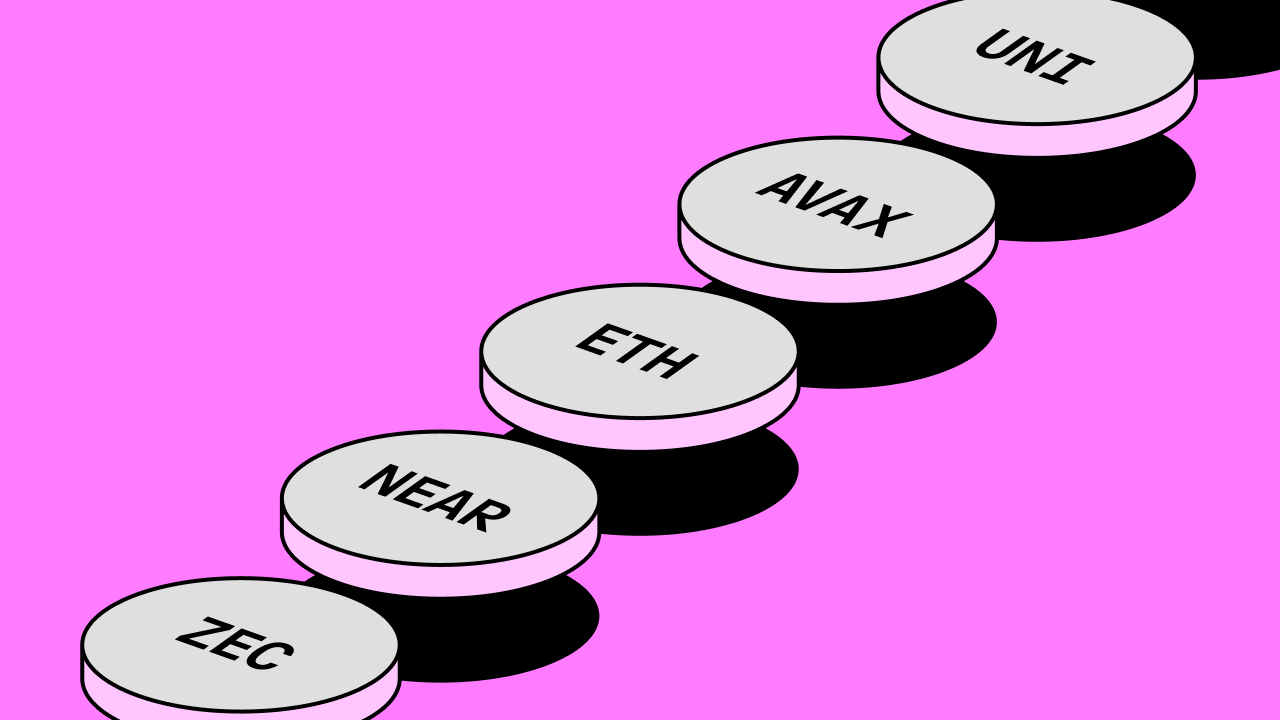
Is altseason here? ETH is up 48%, Uniswap is up 40%, Avalanche is up 50%, and some analysts think there's more to come.





MARKET BYTES
Bitcoin rallies above $87k for the first time in 8 months
Last week, what looked like two major roadblocks for crypto markets arrived: the crypto regulatory package known as the CLARITY act stalled in the Senate and the Federal Reserve raised interest rates for the first time in three years.
In response, crypto markets … kicked off their biggest rally since bitcoin hit its all time high early last October?
On Monday, bitcoin broke $87,000, its highest price since January. Ether broke $2,800 and the broader crypto market climbed back above the $3 trillion mark. Altcoins, which have been underperforming BTC and ETH for months, sparked back to life (more on this in the main story below). And crypto stocks saw significant gains while BTC ETFs attracted in $999 million on Monday — their biggest day in nearly a year.
“I do think [crypto winter is] over, it’s crypto spring, the crocuses are blooming,” said Matt Hougan, CIO of the crypto-focused fund manager Bitwise. “I think this will actually be the strongest and longest-running bull market in crypto’s history.”
So what helped markets defy bad news and what could happen next? Here’s the news you need to know…
What triggered the rally? Analysts point to a few factors, including cooling oil prices over the last week, increasing institutional interest in BTC and major altcoins, the return of buying from the BTC-accumulation giant Strategy, and capital that had been deployed into AI rotating back to crypto.
But for crypto specifically, the massive increase in the popularity of perpetual futures (or perps) helps explain why prices can spike or fall so quickly when markets begin to move. That’s because perps trades generally use leverage, which can amplify gains or losses.
In this case, around $920 million in bearish bets was liquidated as prices picked up on Monday. “A continued unwinding of short positions could fuel a squeeze, as traders rush to buy back assets to close losing bets, adding further upward pressure on prices,” explains Bloomberg. “Yet open interest continued to rise, suggesting new leveraged positions are entering the market even as shorts are forced out.”
Value play… According to some analysts, this week’s rally just represents traders catching on to the fundamentals of the market. “For most of this year crypto was the forgotten macro trade, it lagged equities and gold while capital and attention moved to AI,” Rich Rosenblum, co-founder of crypto market maker GSR, told Bloomberg. “What’s changed is positioning, not fundamentals: Bitcoin was under-owned and leaning short.”
What about the CLARITY Act?
Most analysts had pegged the potential passage of the CLARITY Act as a catalyst for a major spike in crypto prices. So it was a bit of a surprise that markets rallied in the days after it failed to garner enough votes in the Senate to proceed.
The counterintuitive result is partially because the major financial regulators in the U.S. — the Securities and Exchange Commission (SEC) and Commodity Futures Trading Commission (CFTC) — have pledged to fill the regulatory gap with rulesets of their own.
“It’s the most pro-crypto SEC in the history of the U.S., it’s the most pro-crypto CFTC in the history of the U.S.,” said Bitwise’s Hougan. “So ironically, in the absence of CLARITY passing, we may actually have stronger pro-crypto regulation.”
Tokenize it… Last week, the SEC rolled out a 5-year “innovation exemption” allowing firms to offer U.S. customers access to tokenized stock trading. Tokenized stocks typically offer advantages like 24/7 trading, low fees, and the ability to buy and sell fractional shares. "The Innovation Exemption is designed to resolve challenges that have prevented responsible innovation from taking root in the United States while providing investor protections and market integrity standards," said SEC Chair Paul Atkins.
ALTERIOR MOTIVES
Altseason might finally be brewing — which tokens are poised to outperform?
For the past two years, the best long-term investment in crypto was simple: just hold bitcoin. Bitcoin is up 28% in that period, while the median mid-sized altcoin lost 74% and ETH was essentially flat, according to data from Glassnode.
But since bitcoin’s breakout in August, the altcoin market has started to show signs of life. Several tokens, including Ethereum, have outperformed BTC’s approximate 35% gain since late August, and the Coindesk80, which tracks the 80 most liquid altcoins outside of the Top 20, is up more than 50% over the same span.
The Coinmarketcap Altcoin Season Index, which defines “altseason” as a reading of 75 or above, is still only at 51, as of Wednesday. But after sitting at just 23 three weeks ago, the calls for a full-on altseason are growing louder.
Here’s what you need to know.
Ethereum’s breakout could be the first piece of altseason
Altseason is just crypto slang for a period in which smaller tokens outperform BTC. History shows that previous broad altseasons started with Ethereum outperforming bitcoin. (Past performance, of course, isn’t indicative of future results.)
Since mid-August, ETH has surged 48%. Despite last week’s failure to advance the CLARITY Act, plus a recent rate hike from the Fed, Ethereum is up around 15% over the past week, in part due to institutional interest.
The ETH accumulation firm Bitmine Immersion Technologies added $75 million in ETH last week, bringing its total stash to 4.9% of ETH’s total supply. And with ETH's staked ratio at new highs of around 36%, its supply dynamics are tightening just as market sentiment shifts.
Tom Lee, the chairman of Bitmine, says that he believes institutional buying should keep growing, and called ETH’s Q3 performance “a prelude to a potentially stronger move up“ toward the end of the year.
“Given that institutions have underweighted crypto in 2026, partially due to the outperformance of AI stocks in early 2026, we expect institutions to substantially increase their exposure in the final three months of 2026,” he said.
Privacy tokens have been an early outperformer. Can their run last?
One of the biggest altcoin outperformers of the year has been Zcash, a decade-old privacy-focused token that's up nearly 2,500% over the past year. A new Zcash ETF is on the verge of reaching $1 billion in assets under management within a month of its launch, although after a 25x gain in a year, Zcash’s short-term upside might be limited.
Still, the need for privacy in crypto is clear, says Zach Pandl, head of research at Grayscale. "Anyone that comes from [traditional finance] and looks at public blockchain technology would tell you that it needs a privacy layer," he said. "We can't disclose all of our transactions, all of our assets in the public ledger at all times."
Another privacy focused token, NEAR, is up around 80% in the past week. NEAR allows users to swap tokens across blockchains, while maintaining confidentiality around deposits, withdraws, and transfers. Earlier this month NEAR announced that its transactions would be confidential by default, and within weeks daily Zcash volume through NEAR rose by sixfold — in effect turning NEAR into one of the default ways for Zcash holders to swap across blockchains.
Bitwise analyst Camran Khosravi called NEAR and ZEC “complements” to each other, highlighting that NEAR provides Zcash holders with confidential, cross-chain liquidity.
Regulatory clarity is lifting DeFi tokens and tokenization hubs
One of the biggest narratives driving capital into crypto is tokenization — the push to put real-world assets like stocks, bonds or real estate, directly onto blockchains. And as Wall Street increasingly bets on a tokenized future, the tokens building the infrastructure for that future have seen significant rallies.
Last week, the Securities and Exchange Commission granted a five-year exemption to qualifying venues seeking to trade tokenized U.S. stocks directly onchain. In the days since, Hyperliquid has gained around 20%, setting a new all-time high; Ondo is up roughly 28%; Uniswap is up more than 40%; and Avalanche has gained nearly 50%.
Hyperliquid and Uniswap are the leading DeFi platforms to trade tokenized assets, including stocks, commodities, and treasuries, while Ondo facilitates financial institutions tokenizing their assets and makes them accessible to onchain liquidity. Avalanche, meanwhile, is a layer-1 blockchain that’s increasingly becoming a hub for tokenized assets, with New York Life announcing it would tokenize corporate bonds on its blockchain, and the parent company of the New York Stock Exchange considering Avalanche as a launch partner for a tokenized-securities trading engine.
Analysts say the rallies reflect growing regulatory certainty around crypto, despite the failure of the CLARITY Act to advance last week. “We’re seeing the SEC and CFTC move more aggressively within their existing authority to provide a framework to the sector,” said Ayesha Kiani, chief operating officer of Monarq Asset Management. "That doesn't replace the durability of legislation, but it does give the market greater confidence that the regulatory environment is continuing to move forward rather than reverting to uncertainty."
NUMBERS
$10 trillion
The annual trading volume that Bernstein estimates prediction markets could reach by 2035, up from $420 billion so far this year. Bernstein believes that the growth could be fueled by rising interest in trading markets related to financial assets, and a falling market share for sports-related markets.
$25 billion
Annualized volume of SoFi’s credit and debit card programs, which the bank is migrating to blockchain-based settlement using its own SoFiUSD stablecoin on Mastercard’s global payments network.
6
The number of major Canadian banks — including Bank of Montreal, Scotiabank, and TD Bank Group — that are “exploring a Canadian-dollar tokenized deposit system designed to move money faster between financial institutions and eventually connect with other digital asset initiatives,” according to CoinDesk.
TOKEN TRIVIA
In crypto, what does "altseason" refer to?
A
The season when crypto trading volume is lowest
B
A period when smaller tokens outperform Bitcoin
C
The launch window for new crypto ETFs
D
When Bitcoin's mining rewards get cut in half
Find the answer below.
Trivia Answer
B
A period when smaller tokens outperform Bitcoin
Coinbase Bytes
Your weekly digest of crypto news
Learn how we collect your information by visiting our Privacy Policy