40 Wall Street firms just tested live tokenized trading

There’s never a dull moment onchain. Here’s what you need to know this week:
Stocks and gold are both surging. So what's keeping bitcoin stuck in the same range for five straight weeks?
BTC ETF inflows just hit a 4-month high. After months of outflows, why institutions poured $853 million back in last week.
40 of Wall Street's biggest firms just tested live tokenized trading. What JPMorgan, Goldman, Citadel and more did, and what it means for markets






MARKET BYTES
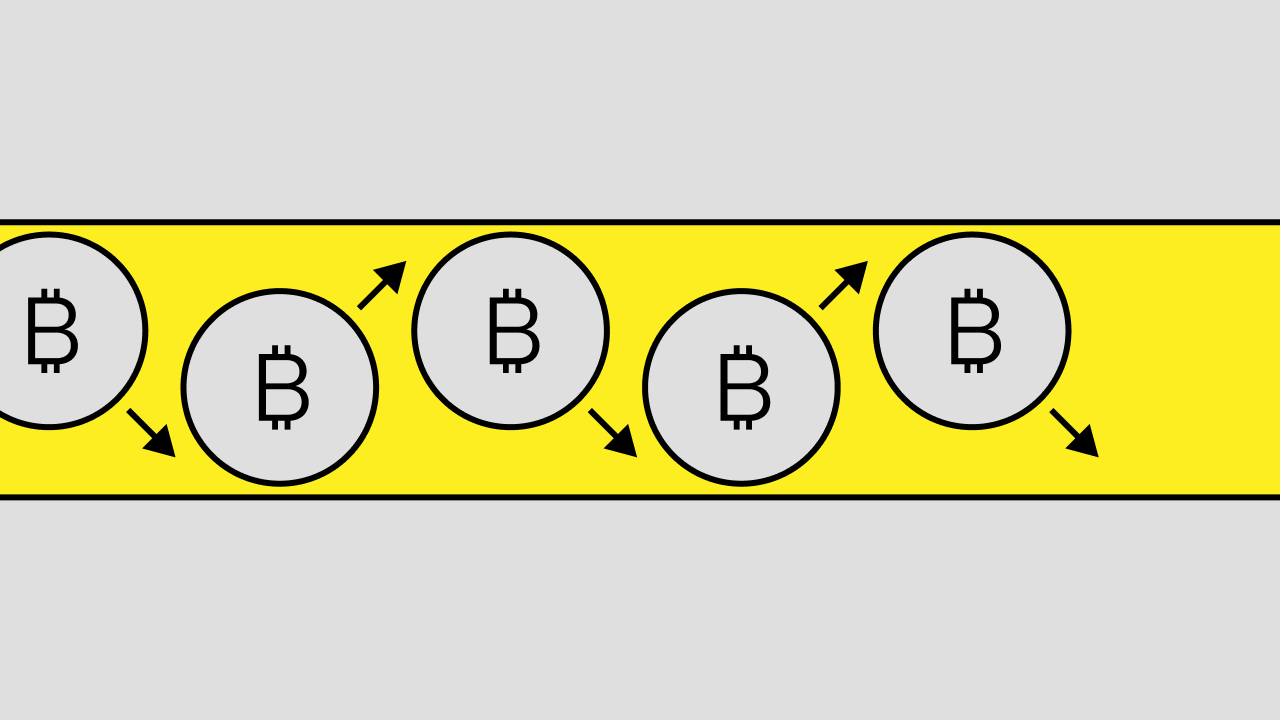
BTC keeps treading water as stocks continue to surge
Last Friday, a weak jobs report increased fears that the Federal Reserve might be forced to raise interest rates later this year, but bitcoin was largely unshaken by the news.
Then on Wednesday, a more positive report — showing that inflation was in line with expectations — eased those interest-rate fears, but again bitcoin barely moved.
“BTC has been trading in a narrow range between $62,000 and $66,000 over the past five weeks, and the inflation data matching expectations did not provide the fuel to break out in either direction from that band,” reports CoinDesk.
Stocks, on the other hand, surged close to all-time highs by the end of trading on Wednesday, with AI infrastructure firms leading the gains. As CoinDesk reports, “Dell Technologies (DELL), which sells servers and other computing infrastructure used to run AI workloads, surged 9.7% to a record closing high of $484. AI cloud provider Nebius (NBIS) extended its rally to 35%, while fellow neocloud CoreWeave (CRWV) held onto a roughly 20% daily gain.”
Here’s more news you should know…
BTC ETF inflows spike to 4-month highs
Last week, spot bitcoin ETF inflows surged to $853 million, a level last seen in April. BlackRock’s leading IBIT fund accounted for $693 million of that total.
“This surge in inflows offers a tentative sign that institutions are dipping back in after the heavy selling earlier this year,” notes CoinDesk.
But despite last week’s rally, the asset class has seen around $4.5 billion in net outflows this year, as crypto markets have struggled to regain ground. In 2025, for instance, when bitcoin was climbing to its all time high of around $126,000, the ETFs that hold the token saw inflows topping $1 billion a week on multiple occasions.
Stake it up… Fidelity’s spot Ethereum ETF, which has almost $900 million under management, is planning to stake as much as 100% of its holdings, according to a new filing. “Net staking rewards would first cover fund expenses and would then be used for quarterly cash distributions,” notes CoinDesk.
Gold just hit its highest level in months
Earlier this year, gold hit its highest price in a decade, topping out at more than $5,300 an ounce in March. After dipping around 18% since then, prices surged again this week to around $4,500 — the best five-day run since January.
What’s been boosting gold? Some analysts point to broad uncertainty over where the economy is headed, given the continued Iran conflict and heavy spending by governments around the world. “This makes nervous investors turn to conservative methods for preserving value, such as buying gold,” said Pippa Malmgren, a former Special Assistant to President George W. Bush and member of the National Economic Council.
Other analysts say gold traders are motivated by more than fear and uncertainty. “Gold’s recent rebound appears to be driven more by changing expectations around interest rates and the economy than by fear alone,” said Joe Cavatoni, senior market strategist at the World Gold Council. “There are signs of weakening, particularly on the jobs front, and markets are responding quickly. As investors adjust their outlook for rates, gold is reacting the way you’d expect a highly macro-sensitive asset to respond.”
In other market news… After struggling in recent weeks, SpaceX shares have bounced back above their IPO level of $135, rising more than 40% from recent lows to around $144 on Wednesday.
TOKEN EFFORT
Wall Street’s tokenization push takes another big step
Over four hours last month, some of Wall Street’s biggest players put their ongoing experiment with blockchain and tokenization technology to a major test during a regular trading day.
More than 40 firms, including JPMorgan Chase, Goldman Sachs, Invesco, and Citadel Securities, “traded stocks and Treasuries, posted collateral, met margin calls and transferred assets,” reports Bloomberg. “Overseeing it all was the Depository Trust & Clearing Corp., which monitored the exercise from ‘war rooms’ in New York and New Jersey as the firms completed dozens of transactions across various use cases.”
The test is the latest milestone in the push to tokenize much of the global financial system, allowing for 24/7 trading, rapid settlement times, and seamless cross-border and firm-to-firm transactions.
Here’s more tokenization stories you should know about…
Tokenized deposits have more than tripled over the past year.
A recent report from CoinShares and Token Terminal found that tokenized real-world-assets (RWAs) deposited onto decentralized lending platforms rose from $2.3 billion to $7.4 billion between Q2 of 2025 and Q2 of 2026. The rise, which tracks a broader increase in tokenized assets onchain, is largely due to Wall Street firms like BlackRock launching products on blockchain rails, like their tokenized U.S. Treasury fund.
Such institutions are launching onchain lending and private credit products, with investors increasingly depositing "conventional" finance assets onchain and using them as collateral or to earn yield.
Ethereum is by far the most popular network for onchain RWA deposits, accounting for around 70%. RWA spot trading volume increased by around 220% in that same span, suggesting “that adoption of tokenised assets continues independently of crypto market conditions,” according to the report.
Could LINK outperform BTC and ETH? Standard Chartered says yes.
Standard Chartered, which holds nearly $1 trillion in assets, recently highlighted LINK — the native token of the Chainlink protocol — as one of the tokens that could be a major beneficiary of the tokenization boom.
Chainlink is a blockchain ecosystem that seamlessly moves assets across networks and provides real-time onchain data for institutions including JPMorgan, Mastercard, and Fidelity. With the tokenization market cap projected to reach $4 trillion by the end of 2028 (a 12x rise) and DeFi assets projected to top $2.7 trillion by 2030 (a 37x rise), Standard Chartered estimates Chainlink should be able to earn about 25 times more in fees over that span than it currently does.
As finance moves ever more onchain, tokenized assets will need trusted data providers, secure movement between networks, and seamless compliance tools — with Chainlink being the only provider that offers all three, says the bank.
Overall, Chainlink helps secure more than $110 billion in assets and saw $4.9 billion transferred through its network last quarter, a 353% year-over-year increase. Despite a recent slump in DeFi activity, the bank has released a series of bullish price forecasts for DeFi tokens this summer, including Uniswap, Aave, and Morpho.
Tokenized stock trading continues to boom
Tokenized equities, which represent onchain versions of corporate shares, ETFs, and other indices on global stock markets, have been one of the fastest growing tokenization sectors this year, according to a recent a16z report.
Tokenized stocks can be self-custodied in digital wallets, traded any time, and used as collateral for DeFi applications — and the asset classes’s market cap rose to more than $1.3 billion by the end of June, up more than 400% year-over-year. The monthly volume of transfers involving tokenized stocks hit $9 billion in June, up 170-fold from the year prior. Traders have also flocked to trading tokenized stocks using leverage, with tokenized equity perps seeing more than $215 billion in trading volume this month alone.
On Tuesday, Coinbase announced that it was approved to launch a hub in Abu Dhabi, giving the company a regulatory base to offer onchain stock trading outside of the U.S. With the UAE emerging as a testing ground for tokenized products and financial innovation generally, Coinbase said it plans to use its new license to offer tokenized securities backed by underlying stock shares.
Tokenized trading could soon be the dominant way assets move across the finance industry: the New York Stock Exchange and the DTCC (which clears almost every U.S. stock trade) have both announced tokenized trading pilots this year.
NUMBERS
$9.5 billion
The potential valuation of the crypto-friendly bank Erebor, based on the $1.5 billion venture funding deal currently under discussion with investors including Andreessen Horowitz, Lux Capital, and Human Capital. The bank, which is around a year-old, targets firms in the crypto, AI, and defense sectors, with planned services including deposits, credit, stablecoin products, treasury management and payments.
$600 million
The size of two loans secured by the bitcoin mining firm MARA Holdings this month, backed by $1.2 billion of its bitcoin holdings. The loan, which will be used to fund a planned acquisition, highlights the growing institutional demand for bitcoin-backed loans. As more public companies add BTC to their balance sheets, CoinDesk says, their ability to borrow against those holdings could become a critical part of the future of corporate finance.
60 million
The number of active users served by the international money transfer service MoneyGram. The company just announced it’s allowing users to use Solana’s blockchain to convert cryptocurrency held in a supported digital wallet into local currency. MoneyGram has invested heavily in blockchain in recent years, rolling out a service allowing users to move between cash and USDC, and more recently announcing MGUSD, its own dollar-backed stablecoin.
TOKEN TRIVIA
What does Chainlink (LINK) primarily provide to blockchain
A
A stablecoin pegged to the U.S. dollar
B
Real-time data and secure movement of assets across networks
C
A decentralized exchange for trading NFTs
D
Free electricity for Bitcoin miners
Find the answer below.
Trivia Answer
B
Real-time data and secure movement of assets across networks
Coinbase Bytes
Your weekly digest of crypto news
Learn how we collect your information by visiting our Privacy Policy