How did perps go from niche to crypto's hottest sector in a year?
There’s never a dull moment onchain. Here’s what you need to know this week:
Crypto and stocks dipped this week. Why hotter-than-expected inflation data caused a wide range of markets to sink on Wednesday.
A year ago, perps helped trigger the biggest liquidation in crypto history. Now they're crypto's fastest-growing sector — and they've expanded way beyond crypto.
Mastercard's CEO says stablecoins have one killer app. Cross-border payments take days and cost a fortune. Here's why stablecoins fix that.






MARKET BYTES
Crypto and stocks fell on hotter-than-expected inflation data
So far this month, crypto markets have been experiencing a bit more of a spooky season than an Uptober to remember. Bitcoin started the month above $87,000 — the highest price since August — and the S&P 500 was riding yet another all-time high.
Prices have bounced around since, as traders have digested conflicting signals about where interest rates could be headed in the coming months. BTC and the S&P were both down earlier in the week, with some analysts suggesting that AI trade was showing cracks. But a surprise interest-rate statement from Federal Reserve Bank of New York President John Williams gave markets a boost on Tuesday afternoon.
But on Wednesday morning, after consumer spending data showed inflation growing more rapidly than expected, fears of faster interest-rate increases were rekindled. Stocks, bonds, and crypto all dipped, with BTC sliding below $82,000. Markets continue to anticipate no rate hike at the Fed’s next meeting, on Oct. 28, but are less certain than they were a few days ago — and much less certain about what comes next.
(As a general rule, rising interest rates tend to make cash more attractive, and falling interest rates tend to bring more capital into asset classes like stocks and crypto.)
“Overall, it was a troubling round of inflation data that undermines the argument for a gradual pace of future rate hikes, and revives the prospects for a quarter-point Fed hike in two weeks,” said Vail Hartman at BMO Capital Markets. “That being said, CPI by no means locks in an October rate hike.”
Here’s more news you need to know…
Mastercard CEO: cross-border payments are stablecoins’ killer app
The CEO of one of the biggest tradfi payments companies in the world has a clear use case in mind for stablecoins: cross-border transactions.
“If you make a cross-border payment it takes days, the fees are unclear,” said Michael Miebach, the CEO of Mastercard. “From a working capital perspective for a company, if you could move the money instantly it would be so much better.”
Earlier this year, Mastercard, Visa, Stripe, and Coinbase announced they were part of a consortium of more than 100 companies backing a new firm called Open Standard, which issues the Open USD dollar-pegged stablecoin. “Open USD… is designed for banking, cross-border payments, card settlement, institutional trading and lending, with an economic model built to reward the companies that drive supply and activity,” explained CoinDesk.
Making BVNK… Mastercard has been making major investments in stablecoin infrastructure, including the purchase of the infrastructure firm BVNK for as much as $1.6 billion earlier this year.
PERPETUAL MOTION
How perps became the hottest onchain sector in under a year
Last October, bitcoin hit its all-time high of around $126,000. A few days later — within hours of surprise tariffs being imposed on China — the biggest crypto by market cap snapped from around $122,000 to $105,000 overnight.
It turned out to be the biggest liquidation event in crypto history, with around 1.6 million traders seeing their leveraged positions erased in a 24-hour period. At the center of the event was a then-niche leveraged trading product called perpetual futures, or “perps.”
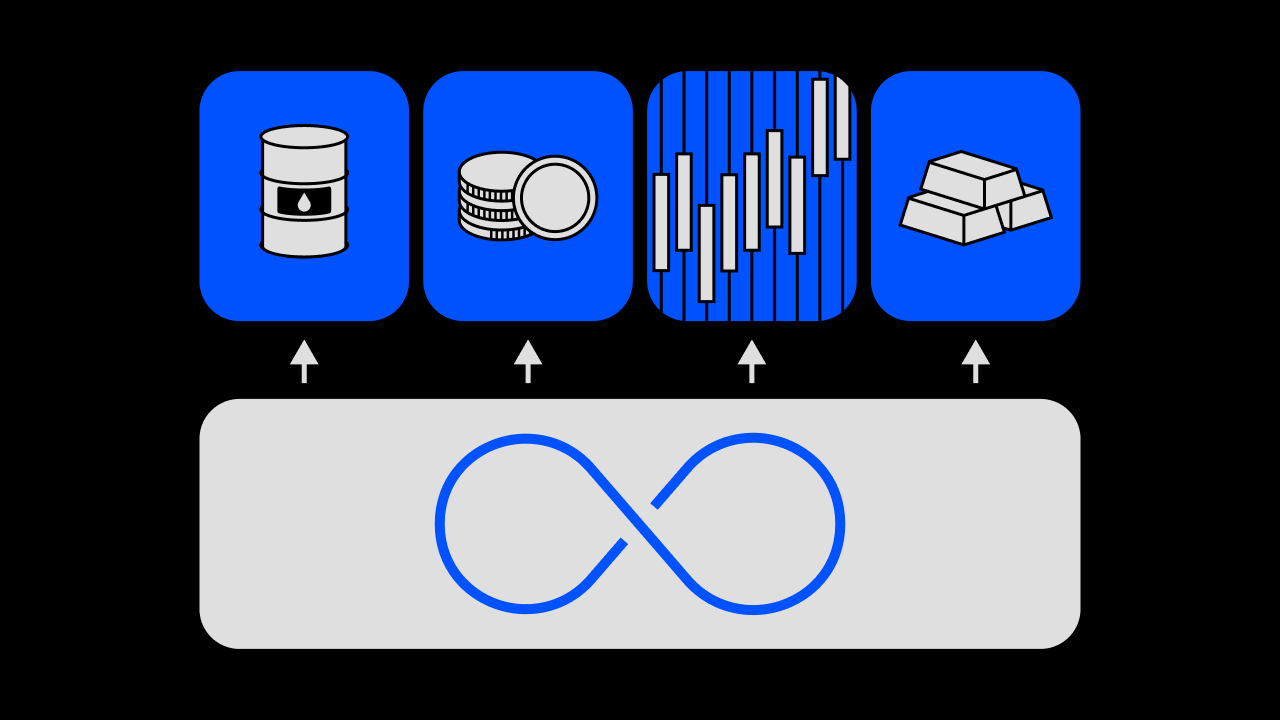
A year later, perps are bigger than ever — and markets are less likely to be surprised by the impact they can have. They’ve evolved into perhaps crypto’s fastest-growing sector and have expanded beyond crypto tokens and into everything from commodities (like oil and gold) to stocks (including some products based on pre-IPO shares in companies like Anthropic).
Here’s what you need to know…
What happened on Oct. 10, 2025?
Leading up to the crash, crypto traders were running on near-record levels of leverage, in large part due to the rising popularity of perpetual futures — which allow traders to open long or short positions using leverage.
On Oct. 7, open interest (the total size of outstanding perps trades) hit a record high of $235.6 billion, with the majority of traders expecting prices to keep going up. So when the tariff news broke, catching traders blindsided, $19 billion of forced liquidations happened within 24 hours, with around 90% of those trades being “long.”
What exactly are perps and how do they work?
Perpetual futures are a type of derivative that allow traders to speculate on the future price of an asset, without actually buying the asset itself. And unlike traditional futures, they don’t expire monthly or quarterly, meaning traders can simply pay a fee to keep their positions open indefinitely.
They operate as an effective gauge for market sentiment, since they trade 24/7 and indicate which direction traders think markets might be going next. And they’ve grown significantly over the past two years — crypto perps saw nearly $2 trillion in trading volume last month alone, between centralized and decentralized exchanges.
How are perps being used outside of crypto?
Perps’ initial popularity was mostly due to the way they made it easy to add leverage to crypto trades, potentially amplifying gains (and, of course, losses). But as Wall Street has increasingly adopted blockchain technology, perps are going mainstream.
Earlier this year, S&P Dow Jones Indices licensed the S&P 500 to a perps trading platform, allowing the index to be traded onchain with leverage around the clock.
Commodities perps have also become popular, and have emerged as key off-hours indicators of where markets might be headed. When the conflict in Iran broke out on a Saturday this February, it was commodities perps that first reflected the change in oil prices.
According to a16z, non-crypto perps saw more than $700 billion in trading volume in both July and August, after being virtually nonexistent this time last year. Overall, equities have grown into the most popular perps market, making up 62% of volume, compared with 22% for commodities and 15% for indices.
For institutions, says Augie Ilag, a partner at CMT Digital, the appeal comes from the ability to adjust or hedge a position without waiting for U.S. markets to open. For retail investors, perps represent access to both leverage and, for traders in some markets, a new level of access to buy blue-chip U.S. stocks like Tesla or NVIDIA. “So it’s [reducing] friction for institutions, and [providing] genuine access for retail,” Ilag said.
Why it matters…
The rising activity of real-world-asset perps trading reflects the changing nature of finance. According to a recent article from a16z partner Robbie Peterson, for much of financial history the ability to create “new markets” was a bottleneck constrained by geography or legal frameworks. Blockchains remove much of that friction — and there’s “no cleaner proof” of this thesis, Peterson argues, than the rise of non-crypto perps.
NUMBERS
$911 billion
The approximate value of assets managed by Pittsburgh-based investment manager Federated Hermes. The firm plans to offer shares in its first tokenized fund next year, likely starting with money market funds.
0.0014%
The current estimated share of global equities (a $151 trillion market) that are tokenized, according to a recent report by CoinDesk — worth around $2 billion. Within 5 years, Citi analysts estimate that total could grow to more than $2.6 trillion.
TOKEN TRIVIA
How are perps different from traditional futures?
A
They require you to own the underlying asset
B
They are only available for crypto tokens
C
They can only be traded during U.S. market hours
D
They never expire
Find the answer below.
Trivia Answer
D
They never expire
Coinbase Bytes
Your weekly digest of crypto news
Learn how we collect your information by visiting our Privacy Policy