What happened to bitcoin's volatility?
There’s never a dull moment onchain. Here’s what you need to know this week:
Bitcoin just hit its lowest-ever level of volatility compared to stocks. What does that mean for traders?
The SEC proposed its first permanent crypto rule. Here's what it would actually do — and what it means for the CLARITY act.
Bond yields just hit multidecade highs. Here's why surging yields could matter for your mortgage, your government, and your portfolio.





MARKET BYTES
Bitcoin’s volatility vs. stocks hits “narrowest gap on record”
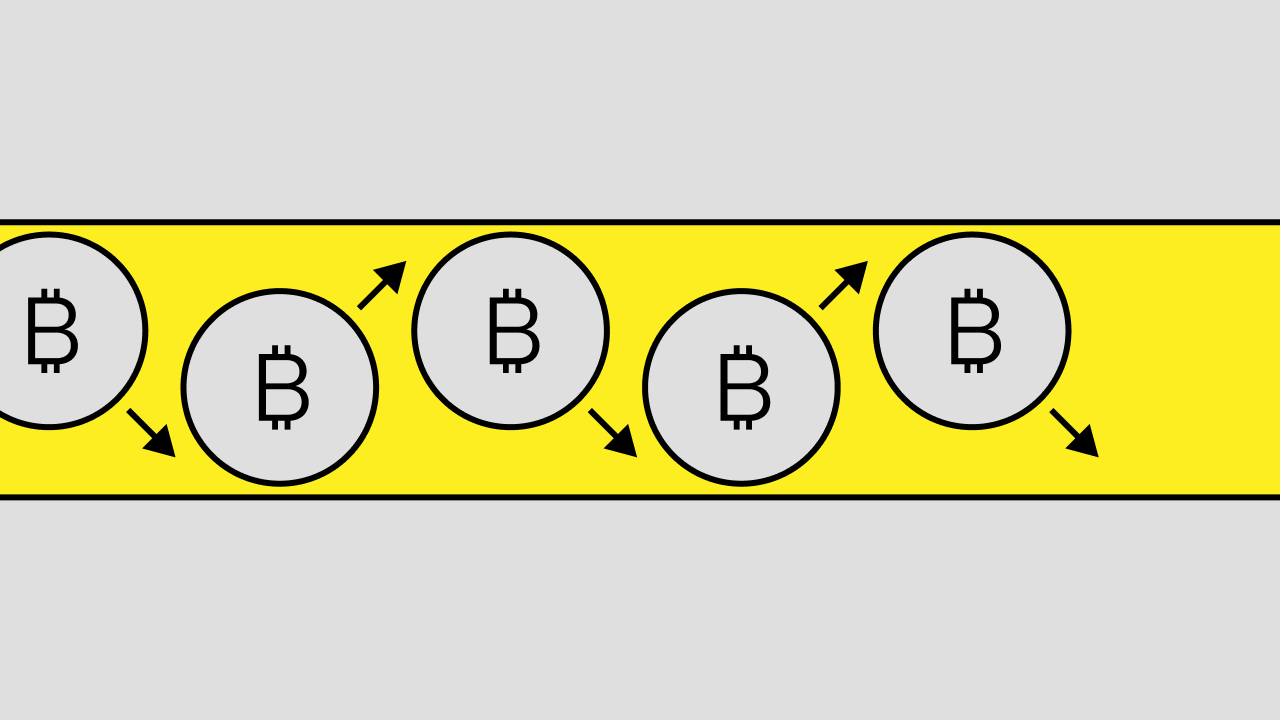
For most of bitcoin’s history, it was known for being volatile compared to most other asset classes. But for the last few months, BTC has generally traded in a narrow range, leaving some short-term traders looking elsewhere for major price swings.
“Bitcoin’s volatility, a measure of how quickly prices move up or down, has fallen to multi-year lows relative to traditional equities,” CoinDesk reports. “Historically, the cryptocurrency’s price swung more than five times as violently as the S&P 500. But bitcoin's 30-day realized volatility has fallen to an annualized 42%, compared with 18% for the S&P 500. That is the narrowest gap on record between the two, meaning bitcoin price swings have become less chaotic than previous cycles.”
Perpetual futures (perps), prediction markets, and AI-related stocks and ETFs may be attracting some capital that would have previously been deployed into crypto. “A trader seeking a 5x or 10x payoff can now choose among bitcoin, Nvidia, gold, an equity perpetual, a 0DTE option, or a sports event contract rather than concentrating risk-taking in crypto,” says NYDIG's global head of research, Greg Cipolaro.
Of course, crypto markets have seen similar lulls before, only to roar back to life when new tailwinds emerge. “If this stalemate breaks,” CoinDesk notes, “thinner liquidity could amplify any price moves, and market participants are waiting patiently on the sidelines for this.”
Here’s more news you should know about…
Stocks dip as bond yields soar to multidecade highs
The S&P 500 slipped on Tuesday as major long-term bond yields surged to multidecade highs. As CNBC reports, “The U.S. 30-year Treasury bond yield scored a fresh 19-year high Tuesday. Elsewhere, Japan’s 10-year bond yield reached its highest level in three decades. Germany’s 30-year bond yield hit its highest since 2011, and the French 30-year government bond yield reached its highest point since 2008.”
Yields are rising over a mix of fears, with some traders worried about inflation and spiraling government spending, others fearing the potential for the AI boom to be overheating markets, and pretty much everyone concerned about the ongoing Iran conflict and oil prices.
One reason consumers should care? Mortgage rates are influenced by bond yields. And, over the long term, rising yields could make it harder for governments to borrow money at a time when spending continues to soar.
Tipping point?… “Investors have worried for some time that increasing government spending could lead to a serious predicament, in which the government still needs to borrow money but investors are unwilling or unable to lend it,” reports the New York Times. “Few analysts and investors have said they believe such a tipping point is imminent, but knowing exactly when or how it will occur in financial markets is practically impossible to predict, leaving investors — and policymakers — on edge.”
SEC announces first crypto rule proposal
For the first time, the U.S. Securities and Exchange Commission (SEC) is pushing to create a piece of permanent regulation specifically for crypto.
On Tuesday, the agency took the first steps towards establishing a ruleset it calls “Regulation Crypto Assets.”
As CoinDesk reports, “The proposal includes two tracks for crypto offerings — a one-time ‘startup’ offering of up to $5 million in a four-year period, and another more restrictive avenue for offerings of up to $75 million in each one-year period, but it comes with more disclosure requirements.”
The move comes as Congress continues to work on the comprehensive regulatory package known as the CLARITY Act. Sen. Cynthia Lummis (R-WY) says that a vote on the package could happen on September 15.
Seeking CLARITY… SEC chair Paul Atkins said that his agency’s plans don’t eclipse the need for the broader legal framework from Congress. "Let me be clear up front: Legislation remains indispensable to enacting 'future-proofed' rules of the road that are durable enough to protect the work we are undertaking today from being unwound by a future rogue regulator," he said.
KEYS TO SAFETY
6 security tips to help keep your crypto (and other assets!) safe
In recent weeks, you might have read about exploits that targeted hardware wallets. The worst of these hacks resulted in some users losing their crypto, and a more recent exploit revealed customer information that could be used for phishing attacks — highlighting the importance of following best practices when it comes to account security.
Here are some tips from Coinbase’s security team on how you can help protect yourself and your assets. (Most of these tips aren’t crypto-specific and can help you protect devices and accounts of all kinds.)
Let’s get into it…
Always use strong, unique passwords.
You should never repeat a password across websites (and never use a simple, memorable phrase). Instead, use a password manager like iCloud Keychain or Google Password Manager. They can generate strong passwords and will store them for you so you don’t need to worry about memorizing them.
Upgrade your two-factor authentication.
Two-factor authentication, or 2FA, is a form of security that forces you to prove your identity in two distinct ways before letting you log into an account. There are multiple forms of 2FA, with varying levels of security. Text message based authentication, where a verification code is sent to your phone, is the least secure, while a hardware security key, like a Yubikey, is the most secure. Using a hardware security key or an authentication app like Google Authenticator is highly recommended.
Protect your seed phrase.
When you create a self-custody wallet, like Base app, it generates a seed phrase — a string of 12 to 24 words that are literally the keys to your wallet. Anyone with access to that phrase can access your wallet from anywhere, so it’s crucial to keep it safe. One recommended way to do that is to write it down and store it offline, which can help avoid it being leaked in data breaches or other incidents.
Lock your account if you think something is wrong.
If you think your Coinbase account has been compromised, you can lock your account via your security settings. Locking your account will sign you out on all devices, and prevent any trades or transfers from being made.
Don’t brag.
Try not to make yourself a target for cybercriminals. Avoid boasting about your gains or portfolio holdings, and be careful about the personal information you share online.
Watch out for phishing attacks.
A phishing attack uses a fake email, SMS message, website, or even voicemail that impersonates a real person or company, in an attempt to steal your personal information. They can be difficult to spot, since they’re designed to look and feel legitimate. Here’s some tips on how to avoid getting phished.
Be cautious about clicking links. If you get an unsolicited message with an urgent tone, inspect it carefully before clicking any links. You can hover your cursor over the link first, and if the alt text doesn’t match the display text, don’t click on it. Looking closely at URLs can also be a dead giveaway. Attackers often use domain names that are nearly identical to who they’re impersonating, like coInbase.com instead of coinbase.com.
Keep your personal information private. Attackers might try to get you to reply to them and divulge personal information, like usernames, email addresses, passwords, or credit card information. Avoid sharing personal information over email, especially in response to unsolicited messages.
Be realistic. Phishing attacks often rely on making an offer that’s too good to be true, like extravagant rewards or monetary compensation. If it sounds too good to be true, it probably is, and you should avoid clicking or downloading anything from those messages.
NUMBERS
$230 billion
The amount in assets overseen by Neuberger Berman. The firm is launching a tokenized fund with Securitize, with Neuberger serving as a subadvisor. The fund, which will be available across Avalanche, Sui, Solana, and Ethereum, will aim to generate attractive risk-adjusted returns by investing primarily in high-yield bonds and other income-producing fixed-income investments.
$100,000+
Amount that has been raised so far by crypto traders to help save a long-running marmot research program. After the researchers behind the 60-year-old program made a viral OnlyFans page for the marmots, crypto traders launched a popular memecoin, with the fees going to the research project. “It’s been a crazy last two weeks, it’s been incredible to see and it’s a relief that the research can continue for another year,” said Julien Martin, a University of Ottawa researcher who co-leads the project.
71%
Prediction market odds (as of Wednesday) that the Federal Reserve will keep interest rates at current levels at the next meeting in September.
66
The number of proposals being considered for Ethereum’s next major upgrade, dubbed Hegotá. The upgrades are focused on wallet functionality and privacy, and Hegotá is expected to go live in 2027.
TOKEN TRIVIA
What is a "phishing" attack?
A
A message impersonating a real person or company to steal your info
B
A type of cold storage wallet
C
A method for generating strong passwords
D
A blockchain consensus mechanism
Find the answer below.
Trivia Answer
A
A message impersonating a real person or company to steal your info
Coinbase Bytes
Your weekly digest of crypto news
Learn how we collect your information by visiting our Privacy Policy